Automated patient portal support that keeps patients moving, call volume down, and your IT and clinical teams focused on what matters most.
As portal usage grows, the support burden grows with it. IT teams field patient login calls instead of focusing on infrastructure. Front desk staff absorb questions between visits. Hiring more people isn’t realistic, and generic IVR platforms don’t understand healthcare workflows.
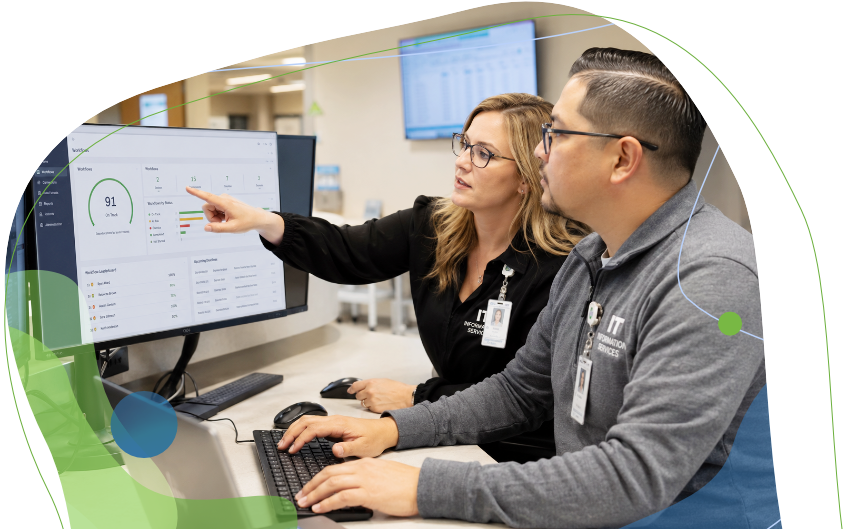
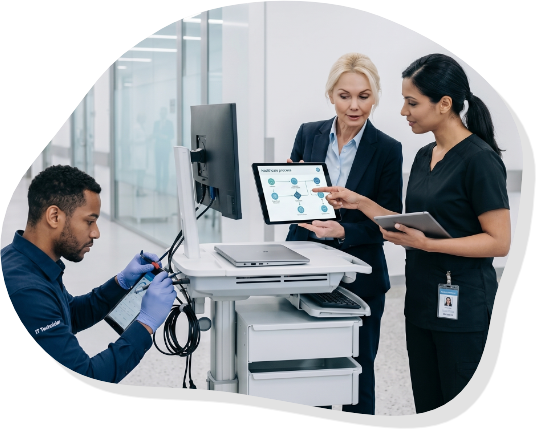
Impulse is more than just a technology vendor that deploys a platform and walks away. We’re a healthcare-native service partner founded and led by people who grew up in provider IT. We onboard according to your workflows, stay involved in optimization, and bring advisory into every stage of the engagement.
What “Advisory Embedded” Looks Like

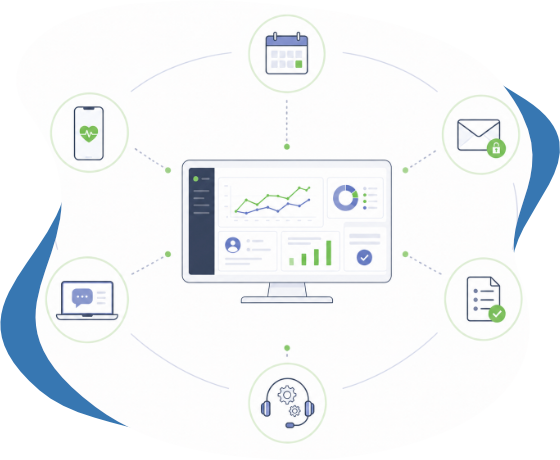
Patients receive guided assistance at any time — evenings, weekends, early mornings — through resolution-focused workflows, not confusing phone menus.

We configure around your environment. Supported platforms include Epic MyChart, Oracle Health, and eClinicalWorks, among others.
When patients need a live person, calls route to a live agent queue — either Impulse agents or your internal team — based on your configuration.
Our patient portal help desk works best with health systems where portal adoption has outpaced support capacity, in addition to rural and community hospitals with lean IT teams, and enterprise systems managing support across multiple facilities.
• IT teams field patient calls
• Front desk absorbs portal questions distracting them from other responsibilities
• Legacy IVR is approaching end-of-life
• 24/7 coverage is needed without adding significant cost and headcount
• Serving a multilingual patient population
North Mississippi Health Services (NMHS), a 1,004-bed regional health
system serving 730,000+ patients across Mississippi, Alabama, and Tennessee, faced mounting portal support demand as Epic MyChart
adoption grew.With a legacy IVR platform approaching end-of-life and help desk staff absorbing routine patient requests, they needed a
scalable solution.
We document your patient
support scenarios. Templates are available if workflows aren’t yet defined.
Call flows, intent mapping, language options, and routing logic are tailored to your environment.
Every workflow is validated before go-live.
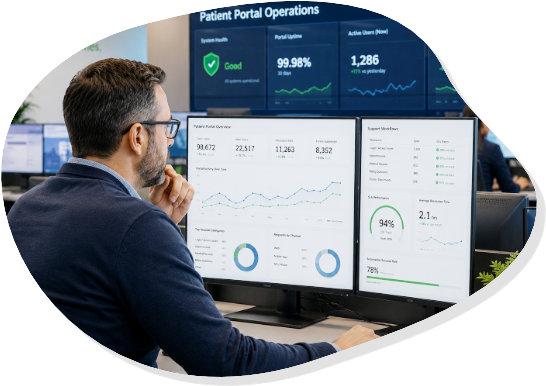
After the support line goes live, Impulse continues monitoring, reporting, and recommending improvements, tracking key metrics to drive action.
Every unanswered or frustrated portal call is a patient who didn’t get help. And a staff member who absorbed the cost.
Let’s talk about what a better patient portal support model looks like for your organization.
Automated patient portal support uses IVR-based workflows to help callers resolve common portal issues such as login problems, password resets, and account access questions. Instead of requiring a live support agent for every request, the system guides callers through structured steps to resolve routine issues quickly. More complex requests can still be routed to internal support teams when needed.
As patient portals become central to scheduling, messaging, and accessing results, hospitals see a growing volume of support inquiries. Many of these requests involve routine tasks such as password resets or navigation questions. Because of their frequency, these calls often consume significant time from IT help desks, call centers, and patient access teams.
Yes. Automated support platforms used in healthcare environments are designed to meet HIPAA and other healthcare security requirements. Systems are configured to protect patient data while collecting only the information necessary to guide callers through support workflows or route requests appropriately.
Impulse is EHR-agnostic and works with all major patient portal platforms, including Epic MyChart, Oracle Health, and eClinicalWorks. The system is configured around your specific workflows and environment and is not a one-size-fits-all template.
Organizations typically see 50–60% of patient portal support requests resolved automatically through self-service. At North Mississippi Health Services, more than 50% of calls were handled without live agent intervention, and average call handling time dropped from ~10 minutes to under 3 minutes.
Yes. When patients need or prefer human support, the IVR identifies this and routes the call to a live agent queue — either staffed by Impulse or your internal team, depending on your configuration. Approximately 20% of callers choose this path.
Most organizations go from discovery to go-live in 45–60 days. The biggest factor is workflow readiness. If your team has documented how you want each patient scenario handled, the timeline moves faster. If not, Impulse provides templates and helps you define them.
Both. Impulse serves rural and community health systems with lean IT teams as well as enterprise systems managing support across multiple facilities. The service scales to your patient volume and support needs. You don’t need a large internal team to get value from it.